
10 TET-style questions on the components of food, food tests, vitamin and mineral deficiency diseases and how to teach the topic.
Food and Deficiency Diseases Quiz: WB TET Upper Primary Science
Quiz challenge
A little practice. A step forward.
10 questions
Learn with explanations
Time per question: 45 sec
0 / 10 completed
--:--
Deficiency of which vitamin causes beriberi?
Explanation
Beriberi is caused by a lack of vitamin B1 (thiamine): the muscles become weak and there is little energy to work. Lack of vitamin A causes night blindness, C causes scurvy and D causes rickets. Depending only on highly polished rice can lead to B1 deficiency.
Key Points
- Sources of B1: hand-pounded rice, whole grains, pulses
- Vitamin B is water-soluble
Memory Tips
- B for beriberi
Additional Information
| Vitamin | Deficiency disease |
|---|---|
| A | Night blindness |
| B1 | Beriberi |
| C | Scurvy |
| D | Rickets |
| K | Delayed blood clotting |
In a Class VII lesson a student puts a few drops of dilute iodine solution on a piece of boiled potato and it turns blue-black. What does this show?
Explanation
A blue-black colour with iodine solution is the test for starch. In the protein test copper sulphate and caustic soda give a violet colour; in the fat test the food leaves an oily patch on paper. Iodine is not used to test for vitamin C in this chapter.
Key Points
- Starch + iodine = blue-black
- Protein + CuSO₄ + NaOH = violet
- Fat = translucent patch on paper
Additional Information
| Looking for | Test with | Result |
|---|---|---|
| Starch | Dilute iodine solution | Blue-black |
| Protein | Copper sulphate + caustic soda | Violet |
| Fat | Rub on paper | Oily patch |
Which activity best fits a constructivist approach to teaching the idea of a balanced diet?
Explanation
Constructivism holds that children build knowledge from their own experience and activity. Analysing their own meals is a project-style, child-centred task in which the child discovers which component is missing. In the other three the child only receives information, which is a teacher-centred approach.
Key Points
- Constructivism: Piaget, Vygotsky
- Known to unknown: start from the child's own plate
- Projects and group discussion are child-centred
Which of the following pairs is NOT correct?
Explanation
Lack of iron causes anaemia, not night blindness. Night blindness is caused by a lack of vitamin A. The other three pairs are correct: vitamin C deficiency causes scurvy, D causes rickets and iodine causes goitre.
Key Points
- Iron: anaemia
- Vitamin A: night blindness
- Source of iodine: iodised salt
Confusion Points
- Iron and iodine sound alike: iron = anaemia, iodine = goitre
Memory Tips
- Iodine for the throat (goitre), iron for the blood (anaemia)
Additional Information
| Nutrient | Deficiency disease |
|---|---|
| Vitamin A | Night blindness |
| Vitamin C | Scurvy |
| Vitamin D | Rickets |
| Iodine | Goitre |
| Iron | Anaemia |
| Calcium | Weak bones and teeth |
A Class VI student says, "Taking more vitamins gives the body more energy." What is the most suitable step for the teacher?
Explanation
The student holds a misconception: energy comes from carbohydrates, fats and proteins; vitamins give no energy but regulate body functions and protect against disease. Correcting a misconception through discussion and evidence is the child-centred approach. Skipping it, simply saying it is wrong or making the child copy the answer does not change the idea.
Key Points
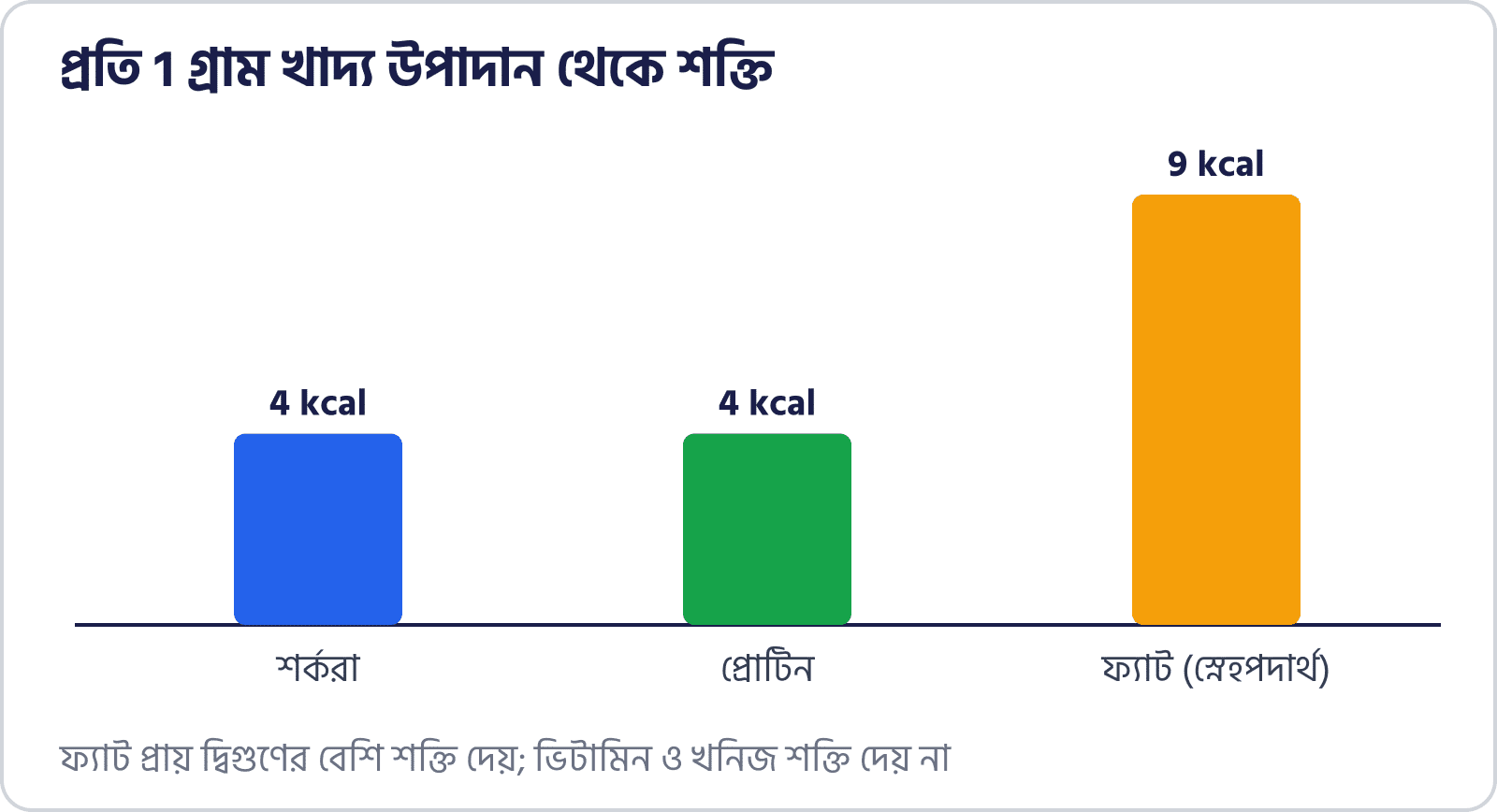
- Energy-giving: carbohydrates and fats (proteins also give energy)
- Vitamins and minerals protect; they give no energy
- A misconception is a chance to learn, not a reason to punish
Additional Information
A child has a swollen belly, feet and face and patches on the skin. The diet lacks mainly protein. Which disease is it most likely to be?
Explanation
Kwashiorkor is caused mainly by a lack of protein; fluid collects in the body and the belly, feet and face swell. In marasmus both protein and energy are lacking, and the child does not swell but becomes very thin. Rickets is caused by a lack of vitamin D and scurvy by a lack of vitamin C.
Key Points
- Kwashiorkor: lack of protein, swelling
- Marasmus: lack of protein and energy, wasting
Confusion Points
- Both are protein deficiency diseases; swelling means kwashiorkor, only thinness means marasmus
Memory Tips
- Kwashiorkor = swollen child, marasmus = wasted child
Additional Information
| Point | Kwashiorkor | Marasmus |
|---|---|---|
| Lack of | Mainly protein | Protein and energy |
| Appearance | Swollen belly, feet, face | Very thin, loose skin |
In a village school a teacher teaches the components of food using leafy vegetables, dal, fish and the mid-day meal instead of unfamiliar foods from the textbook. Which teaching maxim is the teacher following?
Explanation
Starting from foods the child knows and moving to new ideas (carbohydrate, protein, vitamin) is the maxim of known to unknown. The maxims are simple to complex and concrete to abstract; the first two options are reversed. Using the local context makes learning meaningful.
Key Points
- Known to unknown, simple to complex, concrete to abstract
- The local context makes learning meaningful
Confusion Points
- Options often reverse the maxims: always start from the simple, the familiar, the concrete
Which vitamin is made in our skin with the help of sunlight?
Explanation
When sunlight falls on the skin the body makes vitamin D. Vitamin D helps the body use calcium for bones and teeth; its lack causes rickets in children, with soft, bent bones. Vitamins A, K and B12 are not made in the skin this way.
Key Points
- Vitamin D: sunlight, egg yolk, fish oil
- Its lack causes rickets
- Fat-soluble: A, D, E, K
Memory Tips
- D for Day: daylight gives vitamin D
Assertion (A): Washing vegetables after cutting them, or boiling them long in a lot of water and throwing the water away, lowers their vitamin C. Reason (R): Vitamin C dissolves in water and is destroyed by heat. Which is correct?
Explanation
Vitamin C dissolves in water and is destroyed by heat, so it is lost when cut vegetables are washed or their cooking water is thrown away. R gives exactly that reason, so R is the correct explanation of A. It is better to wash vegetables before cutting and cook them briefly in little water.
Key Points
- Water-soluble: B and C
- Wash vegetables before cutting
- Amla, guava, lemon: vitamin C
What is the most suitable way to check whether students can test a food for fat?
Explanation
To assess the skill of testing, the child must be given the task and watched doing it: this is performance-based assessment. The teacher sees whether the child rubs the unknown sample on paper and decides from the oily patch. Written questions or a memorised list measure knowledge, not the skill.
Key Points
- To assess a skill, give the task and observe
- It is part of formative assessment in CCE
- Fat test: an oily, translucent patch on paper
0/10


Leave a Comment
Commenting as ·