
12 questions on the sequence of tenses, conditionals, wish, Hardly…when and time clauses, each answer explained.
Tenses Round 2 Practice Quiz: WBPSC Clerkship 2024 English
Practice session
A little practice. A step forward.
12 questions
Learn with explanations
At your own pace
0 / 12 completed
00:00
He said that he ___ ill.
Explanation
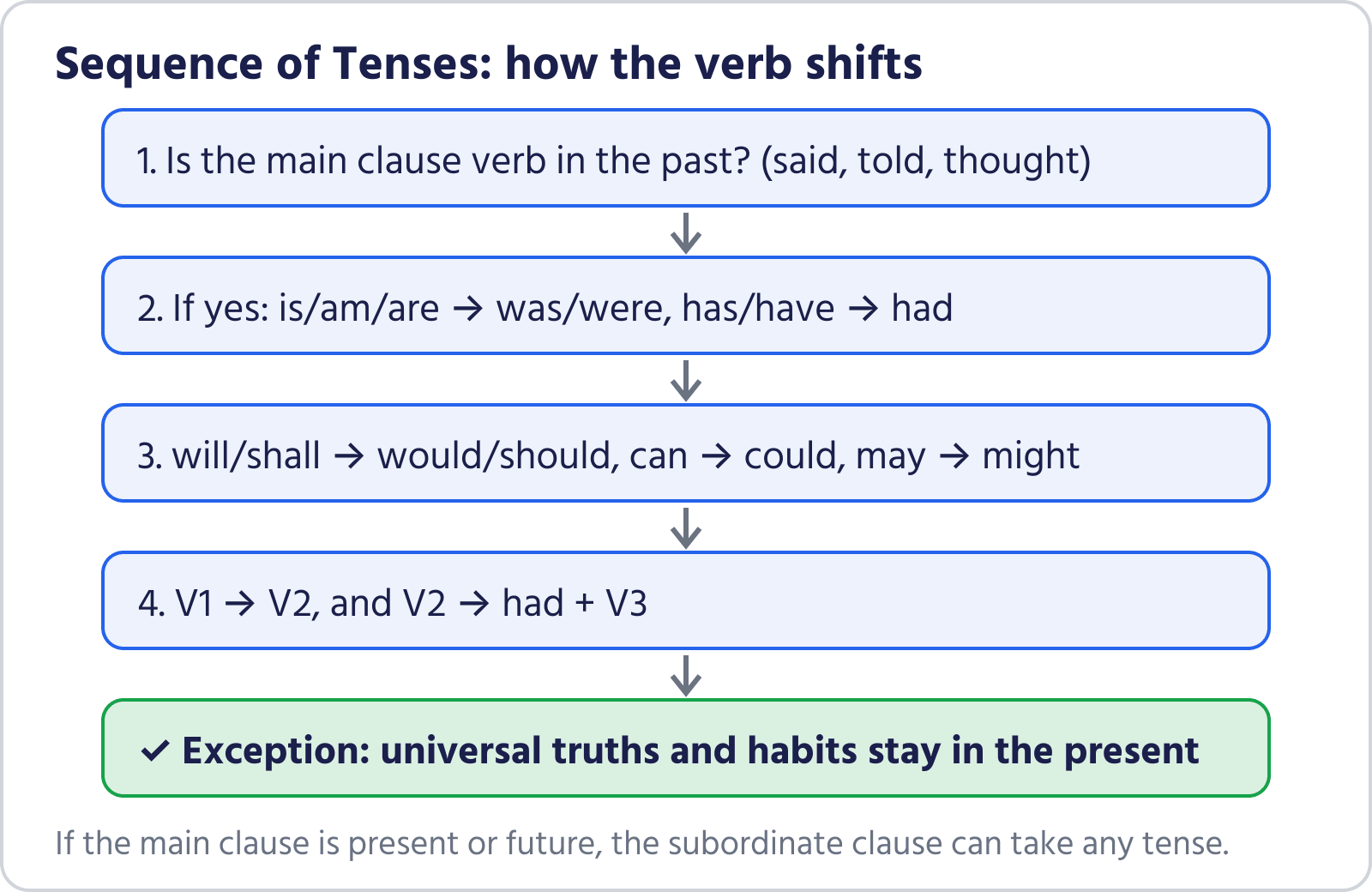
The main verb said is in the past, so is in the reported clause moves back to was. is, has been and will be are present or future forms and do not follow a past reporting verb.
Key Points
- After a past main verb, is becomes was
- has becomes had, will becomes would
Memory Tips
- See said, move the verb one step back
Additional Information
The teacher told us that the earth ___ round the sun.
Explanation
Though told is past, the earth going round the sun is a universal truth. Universal truths ignore the sequence of tenses and stay in the simple present. moved, had moved and was moving are all past forms.
Key Points
- Universal truths and scientific facts stay in the present
- the earth is singular, so moves
Confusion Points
- The trap is to apply the sequence of tenses and pick moved
If I ___ you, I would accept the offer.
Explanation
The main clause has would + V1 (would accept), so this is a Type 2 conditional, an unreal situation now. Its if-clause takes were for every subject, I included. had been would need would have accepted in the main clause.
Key Points
- Type 2: If + V2/were, would + V1
- If I were you is a fixed pattern
Confusion Points
- If I was you is heard in speech, but the exam answer is were
Memory Tips
- would + V1 in the main clause means were/V2 after if
Additional Information
| Type | If-clause | Main clause | Meaning |
|---|---|---|---|
| Type 1 | V1 (simple present) | will + V1 | a real possibility |
| Type 2 | V2 / were | would + V1 | imagined, unreal now |
| Type 3 | had + V3 | would have + V3 | did not happen in the past |
If he had worked hard, he ___ the exam.
Explanation
The if-clause has had + V3 (had worked), so this is a Type 3 conditional about the past that did not happen. Its main clause takes would have + V3: would have passed. would pass pairs with Type 2, will pass with Type 1.
Key Points
- Type 3: If + had V3, would have + V3
- Meaning: he did not work hard and did not pass
Memory Tips
- Starts with had, ends with would have
Additional Information
| Type | If-clause | Main clause | Meaning |
|---|---|---|---|
| Type 1 | V1 (simple present) | will + V1 | a real possibility |
| Type 2 | V2 / were | would + V1 | imagined, unreal now |
| Type 3 | had + V3 | would have + V3 | did not happen in the past |
No sooner had I reached the station ___ the train left.
Explanation
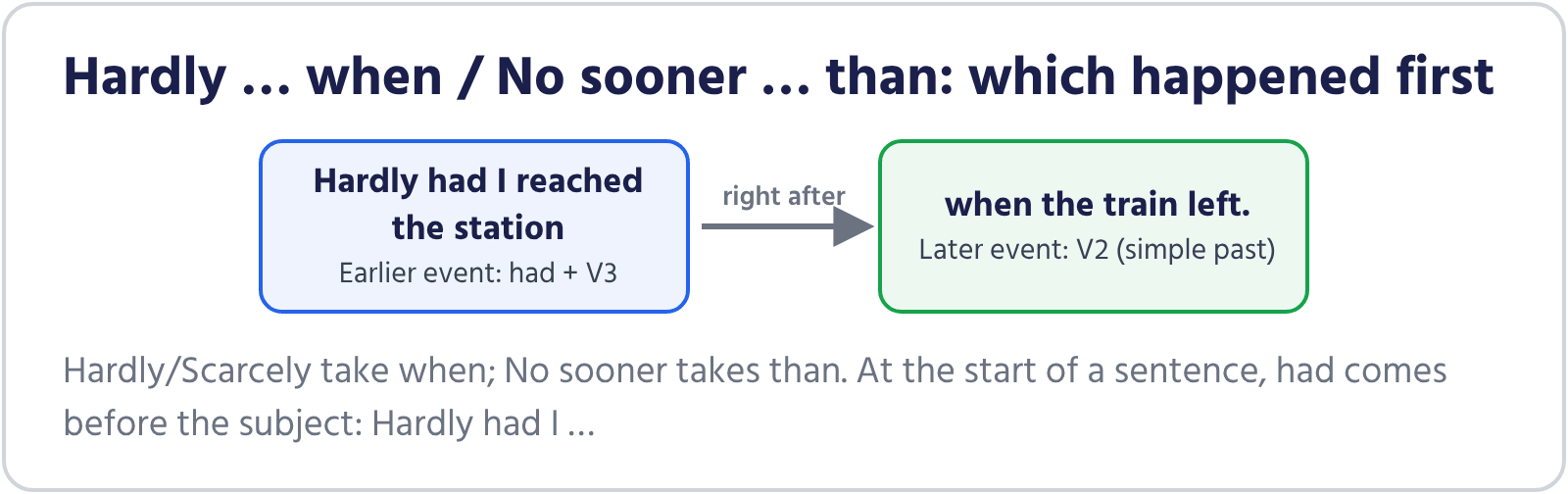
No sooner always pairs with than. when goes with Hardly or Scarcely; then and before do not fit this pattern. The earlier event (reaching) is in had + V3, the later one (leaving) in V2.
Key Points
- No sooner … than
- Hardly / Scarcely … when
Confusion Points
- No sooner … when is a common error
Memory Tips
- No sooner works like a comparative: than
Additional Information
Hardly ___ the bell rung when the students rushed out.
Explanation
rung is the V3 of ring, so it needs had or has. Both events are past and the bell rang first, so the past perfect: had. Because Hardly opens the sentence, had comes before the subject (the bell). did would need V1, and was rung does not fit the meaning.
Key Points
- Hardly at the start: Hardly had + subject + V3
- The later event in V2: rushed
Additional Information
It is high time we ___ for the exam.
Explanation
After It is high time + subject, the verb takes its past form even though the meaning is present: it is already late and should be done now. So started. start, will start and have started are wrong in this pattern.
Key Points
- It is (high) time + subject + V2
- Without a subject: It is time to start
Memory Tips
- high time = already late, so past
Additional Information
| Pattern | Verb | Example |
|---|---|---|
| wish (now) | V2 / were | I wish I knew. |
| wish (past) | had + V3 | I wish I had known. |
| It is (high) time | V2 | It is time we left. |
| as if / as though | V2 / were | He talks as if he were rich. |
I wish I ___ the answer now.
Explanation
When wish expresses an unfulfilled wish about now, the verb after it is in the past: I wish I knew (I do not know). Even with now, know and will know are wrong, and have known does not fit.
Key Points
- wish (now): V2 / were
- wish (past): had + V3
Confusion Points
- Picking the present because of now is the trap
Additional Information
| Pattern | Verb | Example |
|---|---|---|
| wish (now) | V2 / were | I wish I knew. |
| wish (past) | had + V3 | I wish I had known. |
| It is (high) time | V2 | It is time we left. |
| as if / as though | V2 / were | He talks as if he were rich. |
It is five years since he ___ the village.
Explanation
In It is + period + since, the since-clause names a point in the past, so the simple past: left. has left and had left do not follow since here, and leaves is present.
Key Points
- It is / It has been + period + since + V2
- since points to the moment it happened, so V2
I will wait here until he ___.
Explanation
until opens a time clause. Even with a future meaning, a time clause takes the simple present, not will: until he comes. came and would come do not match will wait in the main clause.
Key Points
- No will after when, until, as soon as, before, after
- he is singular, so comes
Confusion Points
- Choosing will come because the meaning is future is a common error
Memory Tips
- No will in a time clause, just as after if
I wish I ___ harder last year.
Explanation
last year shows the wish is about the past, which cannot change. A wish about the past takes had + V3: had studied. studied is for a wish about now, and would study or have studied are wrong here.
Key Points
- wish about the past: had + V3
- wish about now: V2
Confusion Points
- Mixing up I wish I knew (now) and I wish I had known (past)
Memory Tips
- Past regret = had + V3
Additional Information
| Pattern | Verb | Example |
|---|---|---|
| wish (now) | V2 / were | I wish I knew. |
| wish (past) | had + V3 | I wish I had known. |
| It is (high) time | V2 | It is time we left. |
| as if / as though | V2 / were | He talks as if he were rich. |
Which sentence is correct?
Explanation
The main verb said is past, so will in the direct speech becomes would, and tomorrow becomes the next day. will, comes and has come all break the sequence of tenses after a past verb.
Key Points
- Past main verb: will becomes would
- tomorrow becomes the next day
Additional Information
| Direct | Reported (past main verb) |
|---|---|
| is / am / are | was / were |
| has / have + V3 | had + V3 |
| will / shall | would / should |
| can / may | could / might |
| V1 (writes) | V2 (wrote) |
| V2 (wrote) | had + V3 (had written) |
0/12


Leave a Comment
Commenting as ·