
ক্লার্কশিপ ইংরেজি কুইজ: Noun ও Pronoun (পর্ব 2)
একটু অনুশীলন, আরও এক ধাপ এগিয়ে।
Noun-এর plural ও possessive, pronoun-এর ক্রম ও case নিয়ে 12টি প্রশ্ন, প্রতিটির ব্যাখ্যা সহ। 📖 বিস্তারিত পড়ুন
Choose the correct plural of 'mother-in-law'.
Compound noun-এ plural-এর s বসে মূল শব্দে, যেটি আসল মানুষটিকে বোঝায়। Mother-in-law-এ মূল শব্দ mother, তাই mothers-in-law। Mother-in-laws-এ s ভুল জায়গায়, আর mothers-in-laws-এ দুবার plural হয়ে গেছে।
- Compound noun-এ মূল শব্দটি plural হয়
- sons-in-law, passers-by, commanders-in-chief একই নিয়মে
- mother-in-laws কানে চেনা লাগলেও পরীক্ষার ব্যাকরণে ভুল
- প্রশ্ন করুন: আসলে কে বা কী অনেকগুলি? Mother অনেক, law নয়।
| Singular | Plural |
|---|---|
| mother-in-law | mothers-in-law |
| son-in-law | sons-in-law |
| passer-by | passers-by |
| commander-in-chief | commanders-in-chief |
Choose the correct plural of 'criterion'.
Criterion একটি Greek শব্দ, এর plural criteria (-on থেকে -a)। Criteria নিজেই plural, তাই তাতে আবার s যোগ করে criterias লেখা ভুল। Criterion's হল possessive, plural নয়।
- criterion থেকে criteria, phenomenon থেকে phenomena
- crisis থেকে crises, analysis থেকে analyses
- criteria ও phenomena দেখে singular মনে হয়, কিন্তু এরাই plural
- -on শেষ হলে -a, -is শেষ হলে -es।
| Singular | Plural |
|---|---|
| criterion | criteria |
| phenomenon | phenomena |
| crisis | crises |
| analysis | analyses |
| datum | data |
Fill in the blank: He gave the shopkeeper a ______ note.
সংখ্যা আর noun hyphen দিয়ে জুড়ে আরেকটি noun (note)-এর আগে বসলে পুরোটা adjective, আর adjective-এর plural হয় না। তাই ten-rupee note। Ten-rupees-এ s বাড়তি, ten rupees' possessive, আর tens-rupee-তে সংখ্যার শব্দে s বসানো ভুল।
- a five-year plan, a two-day holiday, a ten-rupee note
- hyphen দিয়ে জোড়া সংখ্যা-noun আসলে adjective
- Hyphen দেখলেই s বাদ।
Fill in the blank: The ______ park was crowded on Sunday.
Children নিজেই plural (child-এর), আর এর শেষে s নেই। s-ছাড়া plural-এর possessive হয় 's দিয়ে, তাই children's park। Childrens বা childrens' বলে কোনো শব্দ নেই, আর childs' তো child-এর plural-ই নয়।
- s-ছাড়া plural + 's: children's, women's, men's
- s-যুক্ত plural + শুধু apostrophe: boys', girls'
- children's ও boys': দুটিই plural possessive, কিন্তু apostrophe-এর জায়গা আলাদা
- আগে plural বানান, তারপর দেখুন শেষে s আছে কি না।
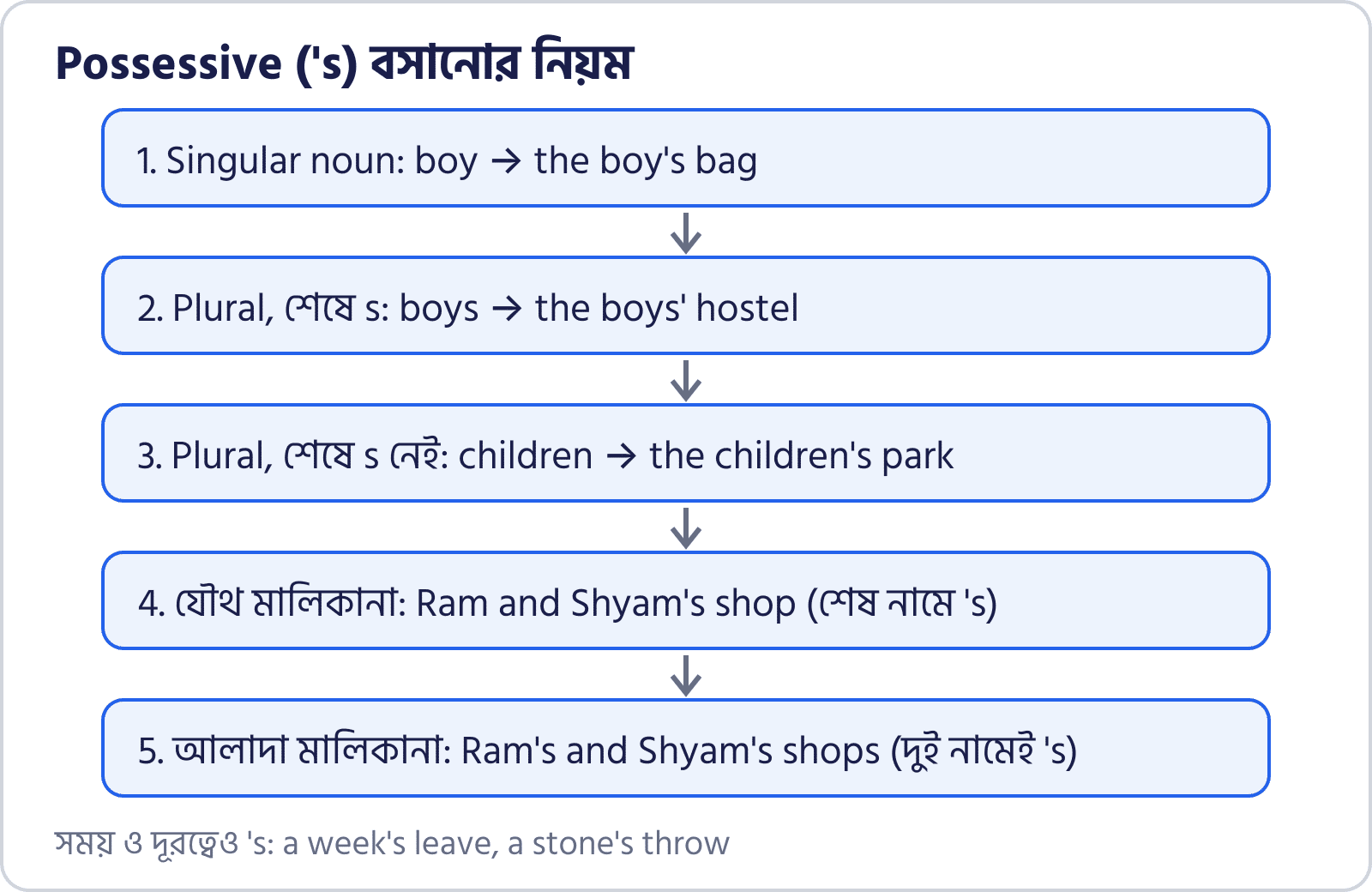
Ram and Shyam together own one shop. Choose the correct expression.
একটিই জিনিস দুজনের যৌথ মালিকানায় থাকলে 's বসে শুধু শেষ নামে: Ram and Shyam's shop। দুই নামে 's দিলে (Ram's and Shyam's) বোঝায় দুজনের আলাদা দোকান, তখন shops লিখতে হয়। Shyams' ভুল, কারণ Shyam একজন মানুষ, plural নয়।
- যৌথ মালিকানা: শুধু শেষ নামে 's
- আলাদা মালিকানা: প্রতিটি নামে 's, noun plural
- Ram's and Shyam's shops মানে দুটি আলাদা দোকান, একটি যৌথ দোকান নয়
- এক দোকান, এক 's।
Fill in the blank: She has applied for ______ leave.
সময় ও দূরত্ব বোঝাতে noun-এ possessive বসে: a week's leave, a stone's throw। এখানে week singular, তাই 's। দুই সপ্তাহ হলে লিখতে হত two weeks' leave (s-যুক্ত plural, তাই শুধু apostrophe)। A weeks বা one weeks-এ a বা one-এর পরে plural বসানো ভুল।
- সময়ের possessive: a day's work, a week's leave
- দূরত্বের possessive: a stone's throw, a mile's walk
- Leave কতদিনের? এক সপ্তাহের, মানে week's।
| সময় | ঠিক রূপ |
|---|---|
| এক সপ্তাহ | a week's leave |
| দুই সপ্তাহ | two weeks' leave |
| এক দিন | a day's work |
Fill in the blank: ______ have been selected for the interview.
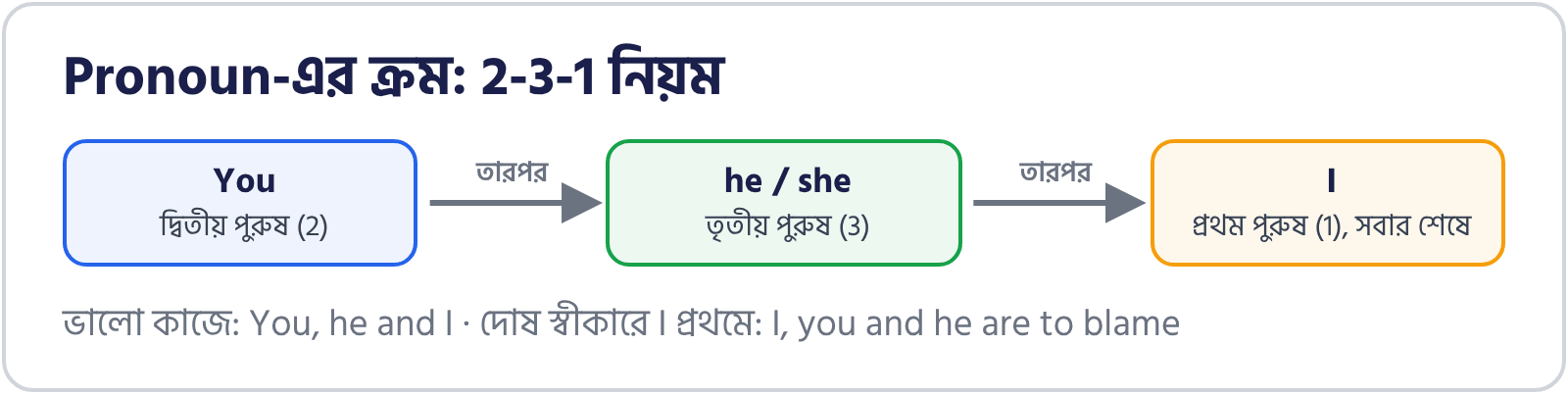
একাধিক পুরুষের pronoun একসঙ্গে বসলে ভদ্রতার ক্রম 2-3-1: আগে second person (you), তারপর third person (he), শেষে first person (I)। নির্বাচিত হওয়া ভালো খবর, দোষ স্বীকার নয়, তাই You, he and I। বাকি তিনটিতে I বা he আগে চলে এসেছে।
- সাধারণ বাক্যে 2-3-1: You, he and I
- I সবসময় শেষে, শুধু দোষ স্বীকারে প্রথমে
- 2-3-1: ভালো কাজে নিজেকে রাখুন সবার শেষে।
Fill in the blank: ______ are to blame for the delay.
দোষ বা ভুল স্বীকারের বাক্যে নিয়ম উল্টে যায়: first person আগে বসে, কারণ নিজের দায় আগে নিতে হয়। তাই I, you and he are to blame। You, he and I ক্রমটি সাধারণ বা প্রশংসার বাক্যের জন্য।
- দোষ স্বীকারে 1-2-3: I, you and he
- সাধারণ বাক্যে 2-3-1: You, he and I
- 2-3-1 মুখস্থ করে সব বাক্যে খাটালে এই প্রশ্নে ভুল হয়: to blame দেখলেই I প্রথমে
- প্রশংসায় I শেষে, দোষে I প্রথমে।
Fill in the blank: My brother is taller than ______ am.
শূন্যস্থানের পরে am আছে, আর am-এর একটি কর্তা চাই। কর্তার জায়গায় বসে subject form I: than I am। Me হল object form, myself reflexive (কর্তা নিজেই কর্ম হলে), আর mine possessive, কোনোটিই am-এর কর্তা হতে পারে না।
- than বা as-এর পরে verb থাকলে subject form: than I am, as he is
- verb মনে মনে বসিয়ে দেখুন: pronoun কর্তা না কর্ম
- Than-এর পরে বাক্যটি শেষ করুন: than I (am)।
Fill in the blank: Each of the girls must bring ______ own book.
Each singular, তাই পরের pronoun-ও singular হবে, plural girls দেখে their নয়। প্রত্যেকে মেয়ে, তাই feminine singular her। His পুরুষবাচক, আর its জিনিস বা প্রাণীর জন্য।
- each, every, either, neither singular: পরের pronoun-ও singular
- pronoun-এর লিঙ্গ ও বচন তার noun-এর সঙ্গে মেলে
- of the girls দেখে their বসিয়ে ফেলা: আসল কর্তা each, girls নয়
- Each = এক-একজন, তাই এক-একজনের: her।
Fill in the blank: Let ______ go to the market together.
Let-এর পরের pronoun তার object, তাই object form me বসবে: Let you and me go। You and I-তে I subject form, তাই ভুল। Myself reflexive, এখানে কর্তা নিজের উপর কিছু করছে না, তাই সেটিও ভুল; আর I and you-তে form ও ক্রম দুটিই ভুল।
- Let-এর পরে object form: let me, let him, let them
- you-এর সঙ্গে জুড়লেও form বদলায় না: let you and me
- you and I শুনতে শুদ্ধ লাগে, কিন্তু let-এর পরে তা ভুল
- You বাদ দিয়ে পড়ুন: Let me go, Let I go নয়।
Fill in the blank: The boy ______ bag was stolen went to the police.
এখানে বলা হচ্ছে ছেলেটির ব্যাগ, অর্থাৎ মালিকানা, তাই relative pronoun whose। Who কর্তার জায়গায় বসে (The boy who lost his bag), whom কর্মের জায়গায়, আর which মানুষের জন্য নয়, জিনিস বা প্রাণীর জন্য।
- whose: মালিকানা (মানুষ ও জিনিস দুইয়ের ক্ষেত্রেই)
- who কর্তা, whom কর্ম, which জিনিস
- Whose = যার; পরে noun (bag) এলেই whose।
| Relative pronoun | কাজ | উদাহরণ |
|---|---|---|
| who | কর্তা (মানুষ) | The boy who came is my cousin. |
| whom | কর্ম (মানুষ) | The boy whom you met is my cousin. |
| whose | মালিকানা | The boy whose bag was stolen… |
| which | জিনিস বা প্রাণী | The bag which was stolen… |
📊 বিষয় বিশ্লেষণ
Noun-এর plural ও possessive, pronoun-এর ক্রম ও case নিয়ে 12টি প্রশ্ন, প্রতিটির ব্যাখ্যা সহ।
Related Posts

WBPSC ক্লার্কশিপ 2024 ইংরেজি কুইজ (রাউন্ড 5): গ্রামার ও শব্দভান্ডারের 20টি প্রশ্ন

WBPSC ক্লার্কশিপ ইংরেজি: Noun-এর Plural ও Possessive, Pronoun-এর ক্রম ও Case, উদাহরণ ও 12টি প্র্যাকটিস প্রশ্ন

সালোকসংশ্লেষ ও শ্বসন: ক্লার্কশিপ 2024 জেনারেল স্টাডিজের নোট, তুলনা ও কুইজ
Leave a Comment
Commenting as ·