


WBPSC ক্লার্কশিপ 2024 পার্ট-1-এর ইংরেজি অংশে 30টি MCQ, মান Madhyamik-এর সমান, আর প্রতিটি ভুলে 0.25 কাটা যায়। Noun ও Pronoun-এর প্রথম পাঠে noun-এর প্রকার, pronoun-এর চার form আর who-whom দেখা হয়েছিল। এই দ্বিতীয় পাঠে অন্য দিকগুলি: noun-এর plural ও possessive, আর pronoun-এর ক্রম, case ও relative pronoun। শেষে 12টি নতুন প্রশ্নের প্র্যাকটিস কুইজ।
Table of Contents
Noun-এর plural: যেখানে সাধারণ s খাটে না
বেশিরভাগ noun-এ s বা es যোগ করলেই plural হয় (book থেকে books, box থেকে boxes)। পরীক্ষায় প্রশ্ন আসে ব্যতিক্রমগুলি থেকে। তিনটি দল মনে রাখুন।
1. Compound noun: plural বসে মূল শব্দে
দুই বা তার বেশি শব্দ মিলে তৈরি noun-এ যে শব্দটি আসল মানুষ বা জিনিসটিকে বোঝায়, plural-এর s বসে তাতেই। Mother-in-law-এ আসল মানুষটি mother, তাই mothers-in-law; mother-in-laws ভুল।
| Singular | Plural | মূল শব্দ |
|---|---|---|
| mother-in-law | mothers-in-law | mother |
| son-in-law | sons-in-law | son |
| passer-by | passers-by | passer |
| commander-in-chief | commanders-in-chief | commander |
| man-servant | men-servants | দুটিই বদলায় |
2. বিদেশি (Latin ও Greek) শব্দের নিজস্ব plural
| Singular | Plural |
|---|---|
| criterion | criteria |
| phenomenon | phenomena |
| crisis | crises |
| analysis | analyses |
| basis | bases |
| datum | data |
Criteria নিজেই plural, তাই criterias লেখা ভুল। একটি মাপকাঠি বোঝালে লিখতে হবে one criterion।
3. সংখ্যার পরে noun যখন adjective-এর কাজ করে
সংখ্যা আর noun hyphen দিয়ে জুড়ে আরেকটি noun-এর আগে বসলে সেটি adjective, তাই তাতে s বসে না: a ten-rupee note, a five-year plan, a two-day holiday। একইভাবে নির্দিষ্ট সংখ্যার পরে dozen, hundred, thousand-এ s বসে না: two dozen eggs, three hundred students।
Possessive case: ‘s না s’
মালিকানা বোঝাতে noun-এর সঙ্গে apostrophe বসে। কোথায় বসবে তা নির্ভর করে noun-টি singular না plural, আর plural-টির শেষে s আছে কি না তার উপর।
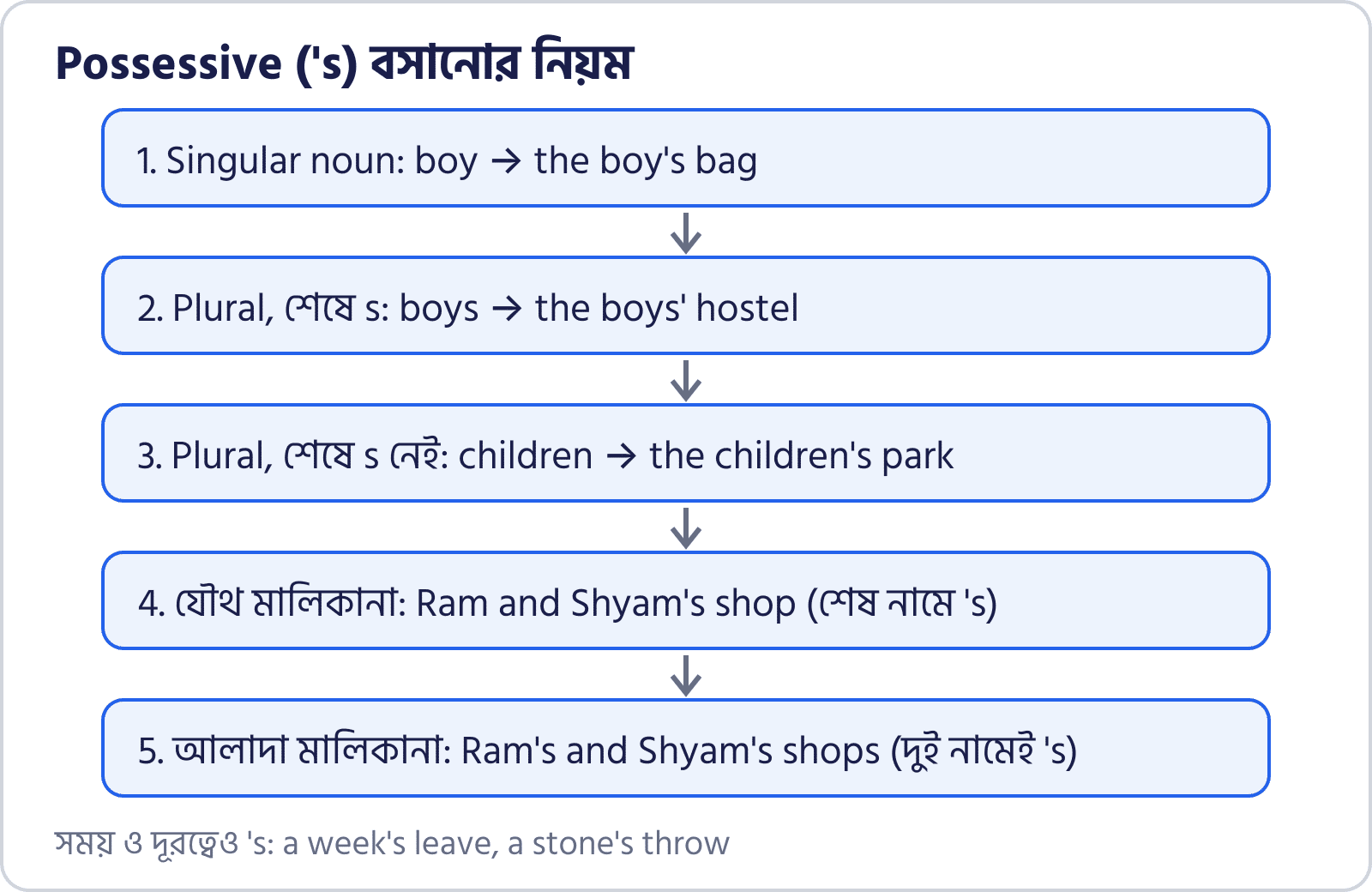
- Singular: ‘s বসে: the boy’s bag, the teacher’s chair।
- Plural, শেষে s: শুধু apostrophe: the boys’ hostel, the girls’ school।
- Plural, শেষে s নেই: ‘s বসে: the children’s park, the women’s college, men’s shoes।
- Compound noun: শেষ শব্দে ‘s: my sister-in-law’s house।
- যৌথ মালিকানা (একটিই জিনিস দুজনের): শুধু শেষ নামে: Ram and Shyam’s shop। আলাদা মালিকানা: দুই নামেই: Ram’s and Shyam’s shops।
- সময় ও দূরত্ব: ‘s বসে: a week’s leave, two days’ journey, a stone’s throw।
Pronoun-এর ক্রম: 2-3-1 নিয়ম
একই বাক্যে একাধিক পুরুষের pronoun থাকলে ভদ্রতার নিয়মে আগে second person (you), তারপর third person (he, she), শেষে first person (I)। কিন্তু দোষ বা ভুল স্বীকারের বাক্যে first person আগে বসে, নিজের দায় আগে নিতে হয়।
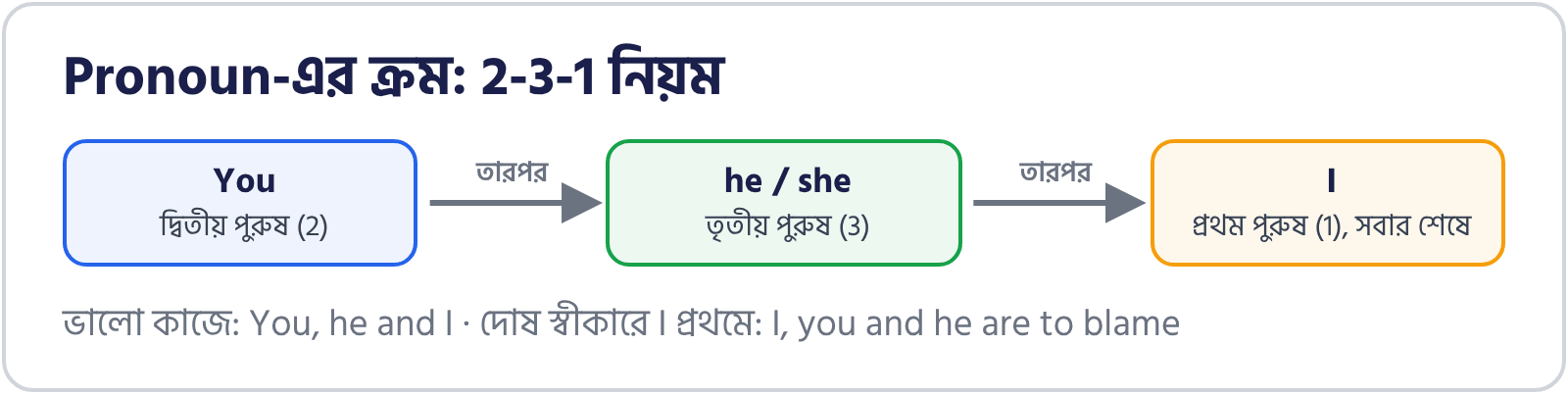
| বাক্যের ধরন | ঠিক ক্রম | উদাহরণ |
|---|---|---|
| সাধারণ বা প্রশংসার | 2-3-1 | You, he and I have been selected. |
| দোষ স্বীকারের | 1-2-3 | I, you and he are to blame. |
Pronoun-এর case: let, than ও whose
- Let-এর পরে object form: let-এর পরের pronoun তার object, তাই Let you and me go; Let you and I go ভুল। একইভাবে Let him try, Let them play।
- Than বা as-এর পরে: পরের verb-টি মনে মনে পূর্ণ করুন। He is taller than I (am), কারণ I am-এর কর্তা I। কিন্তু I like you more than him (I like him), এখানে him কর্ম।
- Each, every, either, neither + pronoun: এরা singular, তাই পরের pronoun-ও singular: Each of the girls must bring her own book।
- Whose: মালিকানা বোঝাতে relative pronoun whose: The boy whose bag was stolen went to the police।
হাতে-কলমে 5টি উদাহরণ
- Two passer-bys helped the old man. ভুল কোথায়? Compound noun-এ মূল শব্দ passer, তাই plural passers-by। ঠিক বাক্য: Two passers-by helped the old man।
- He has applied for a week leave. সময়ের possessive লাগবে: a week’s leave। দুই সপ্তাহ হলে two weeks’ leave (plural-এ শেষে s, তাই শুধু apostrophe)।
- I, he and you will go to the meeting. এটি দোষের বাক্য নয়, তাই 2-3-1: You, he and I will go to the meeting।
- My brother is smarter than me am. Am-এর কর্তা লাগবে, তাই subject form: My brother is smarter than I am।
- Ram’s and Shyam’s shop is closed. দোকান একটি, মালিক দুজন: যৌথ মালিকানা, তাই ‘s শুধু শেষ নামে: Ram and Shyam’s shop is closed।
শর্টকাট ও পরীক্ষার ফাঁদ
- s দেখে ঠকবেন না: criteria, phenomena, data দেখতে singular নয়, এরাই plural। Criterias, phenomenas ভুল।
- Hyphen মানে adjective: a five-year plan, a ten-rupee note; five-years plan ভুল।
- Children’s, women’s: শব্দটি s ছাড়াই plural, তাই ‘s। Childrens’ বা womens’ বলে কোনো শব্দ নেই।
- যৌথ না আলাদা: noun singular (shop) হলে সাধারণত যৌথ, তাই শেষ নামে ‘s; plural (shops) হলে দুই নামে।
- I সবার শেষে, শুধু দোষ স্বীকারে প্রথমে।
- Than-এর পরে verb থাকলে (am, is, does) pronoun অবশ্যই subject form।
পরীক্ষার্থীদের জন্য এর অর্থ কী
পার্ট-1 (সম্ভাব্য ডিসেম্বর 2026) 1 ঘণ্টা 30 মিনিটের, 100 প্রশ্নের মধ্যে ইংরেজি 30টি। Noun-এর plural, possessive আর pronoun-এর form থেকে error spotting ও fill in the blanks দুই ধরনের প্রশ্নই আসে, আর নিয়ম জানা থাকলে এগুলি কয়েক সেকেন্ডে হয়। উপরের তিনটি টেবিল খাতায় তুলে রাখুন, আর নিচের কুইজটি একবার সময় না দেখে, পরে ঘড়ি ধরে করুন। ভুল উত্তরের ব্যাখ্যা পড়ে বুঝুন কোন নিয়মে আটকেছিলেন।
পুরো প্রস্তুতির ছক: ক্লার্কশিপ 2024-এর 8 সপ্তাহের পরিকল্পনা। আগের বছরের প্রশ্নের ধরন দেখতে ক্লার্কশিপ 2023-এর প্রশ্নপত্র। ভুল খোঁজার কৌশলের জন্য Spotting the Error-এর পাঠ।
সূত্র
- WBPSC, Clerkship Examination 2024, Advertisement No. 12/2024 (06.10.2026)
- WBPSC, Clerkship 2024 Scheme and Syllabus
প্রায়শই জিজ্ঞাসিত প্রশ্ন
Mother-in-law-এর plural কী?
Mothers-in-law। Compound noun-এ যে শব্দটি আসল মানুষকে বোঝায় (এখানে mother), plural-এর s তাতেই বসে।
Criteria কি singular না plural?
Criteria plural, এর singular criterion। তাই criterias লেখা ভুল।
Children’s না childrens’ কোনটি ঠিক?
Children’s। Children শব্দটি s ছাড়াই plural, আর s-ছাড়া plural-এ possessive হয় ‘s দিয়ে।
You, he and I না I, you and he, কোনটি ঠিক?
সাধারণ বাক্যে You, he and I (2-3-1)। শুধু দোষ বা ভুল স্বীকারের বাক্যে I প্রথমে: I, you and he are to blame।
He is taller than I না than me?
পরে am থাকলে অবশ্যই I: He is taller than I am। পরীক্ষায় than-এর পরে verb মনে মনে বসিয়ে subject form বেছে নিন।


Leave a Comment
Commenting as ·